What is Nintendo Labo?
The Nintendo Switch is a portable game console that can be docked to a television to allow for a larger screen. One of the most interesting features is the motion controls which allow hand gestures to interact with games.
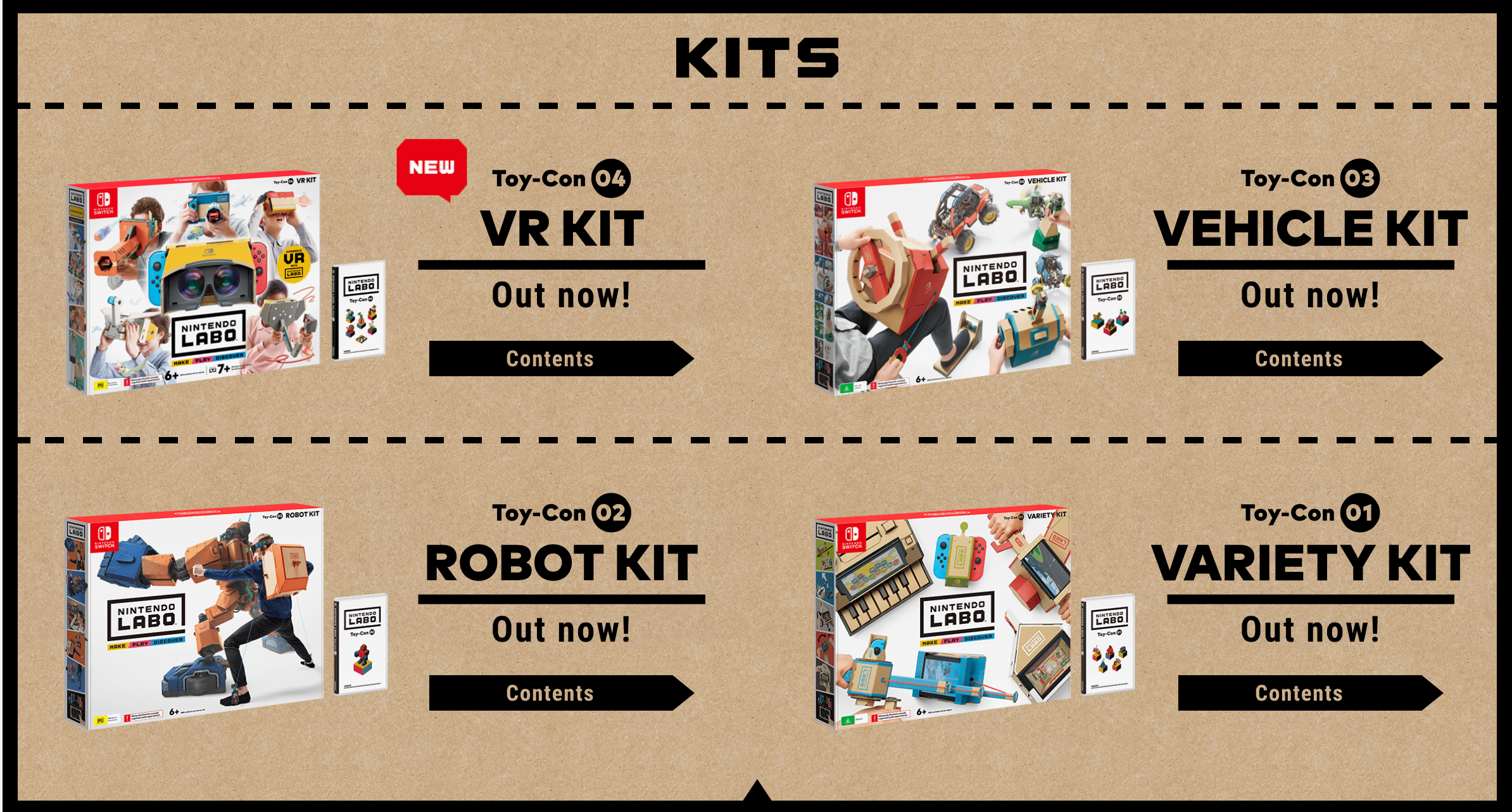
The Nintendo Labo Kit (available at this site: https://www.nintendo.com.au/labo/) allows customers to create “toy-cons” or devices out of cardboard to perform various functions on the Nintendo Switch. One example that is used is a piano made of cardboard, which functions like an actual piano on a Switch mini-game, as seen in Figure 2.
This can be used as a STEM resources to teach digital technologies and science to students through a hands-on activity where they can actually build something functional and understand how it works.
What Year 7 & 8 VCAA outcomes does Nintendo Labo support?
This STEM resource can be used to meet the Victorian Curriculum outcomes:
Design a user interface for a digital system, generating and considering alternative design ideas (VCDTCD031)
Scientific understandings, discoveries and inventions are used to inform personal and community decisions and to solve problems that directly affect people’s lives (VCSSU073)
Link to Academic Research & Justification:
The Nintendo Labo is a perfect resource to use with science and design VCAA outcomes because it allows students to problem-solve issues important to them and discover new ways to design and build solutions. This makes it integral in a problem-based learning approach.
Ferreira & Trudel (2012) point out that “PBL [Problem-Based Learning] can lead to greater conceptual understanding and problem-solving skills” and that the “students’ sense of control of their learning” resulted in the “increase in student interaction. (Ferriera & Trudel, 2012, p.28). PBL captivates students through the use of active learning and engages students by “promoting independent, self-directed learning because, it requires students to make choices about how and what they will learn” (Ferriera & Trudel, 2012, p.28).
With PBL classroom management is an important subject. Even though the students are allowed to take charge and shape their own learning experience, it is important for the teacher to serve as a roaming moderator; as Powell & Kalina (2009) state, “ students need guidance when teachers explain complex topics and knowledge has to be brought out of them since they have their own experiences to draw on” (Powell & Kalina, 2009, 246). They point out that sometimes students do need some level of support; asking them open ended questions can help them dig deeper and relate it to precious experiences which will result in a deeper understanding of the topic and will help them retain the information better.
It is in using these theories that the Labo would be perfect for use in a classroom setting.
References:
Building The Nintendo Labo Piano | Tech Wave? 201, Youtube, Spawn Waves, retrieved 20th May 2019.
Ferreira, M. M. & Trudel, A. R 2012, ‘The Impact of Problem-Based Learning (PBL) on Student Attitudes Toward Science, Problem-Solving Skills, and Sense of Community in the Classroom.’, Journal of classroom interaction, 47 (1), 23 – 30. doi: 130.194.20.173
Nintendo ,2019, Nintendo Labo. [online] https://www.nintendo.com.au/labo/, retrieved 30th May 2019
Powell, K. C. & Kalina, C. J. 2009, ‘Cognitive and Social Constructivism: Developing Tools for an Effective Classroom’, Education, 130 (2),241-250. Retrieved from http://go.galegroup.com.
Victorian curriculum and assessment authority 2017, retrieved 21st May 2019,http://victoriancurriculum.vcaa.vic.edu.au/
 STEM Resources